
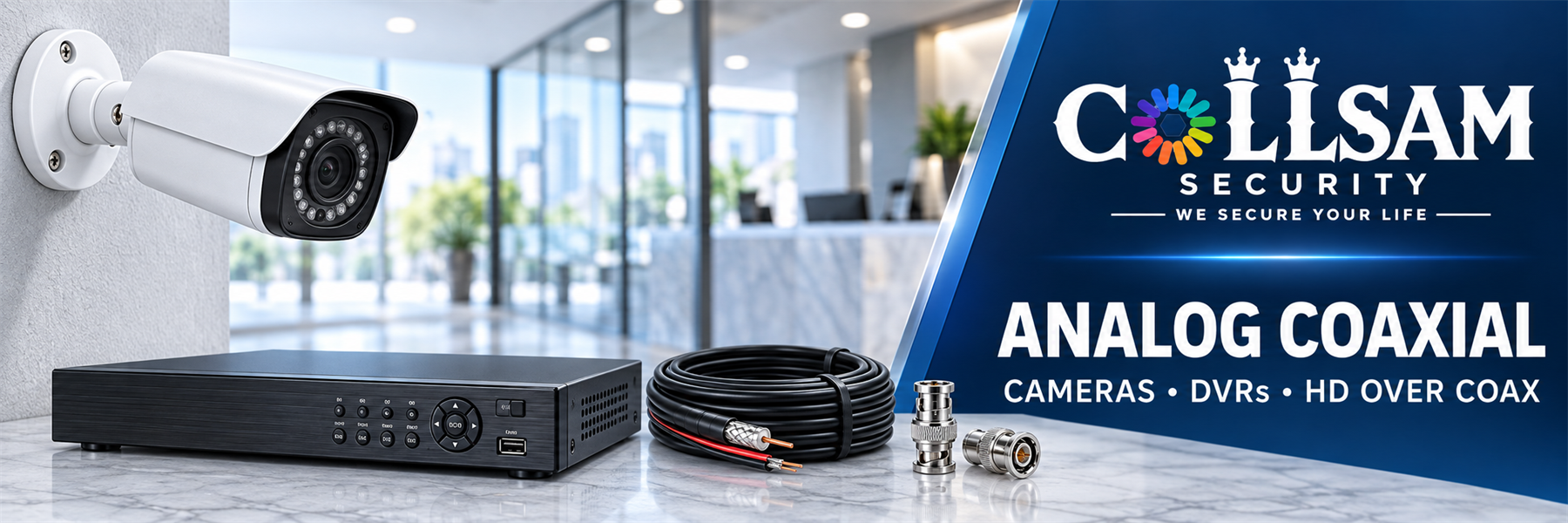
Analog coaxial CCTV helps teams watch a site. It links HD coaxial cameras to coaxial DVR recorders with coax cable. HD over coax can use old cable. Therefore, this may cut upgrade time and cost. Also, it is easy to use and fix. Collsam Security offers analog coaxial gear. Buyers can check each part.
HD over coax sends sharp video through 75-ohm cable. For example, it can use HD-TVI, HD-CVI, AHD, or CVBS. Cameras and recorders must share type and image size. However, analog coaxial recorders may accept more than one type. Thus, this helps sites with mixed gear. It also makes upgrades easier. Good coax cable may stay.
Analog coaxial systems use HD coaxial cameras with many image sizes. First, groups include models below 2 megapixels. They also include 2, 4, 5, and 8 megapixel or 4K models. Some are panoramic, PTZ, plate, or square-case cameras. Thus, each type fits a set view. Buyers should check the type, image size, lens, and site needs. Analog coaxial cameras can work in homes, shops, and work sites.
Coaxial DVR recorders receive, show, and save camera video. Next, channel groups help buyers find the right recorder. Buyers can choose 4, 8, 16, or 32 channels. A full system may need RG59 Siamese cable, BNC plugs, power, storage, and a screen. Therefore, each part must work with the camera and recorder. Cable length and the site also matter. Finally, Collsam Security helps buyers choose analog coaxial CCTV gear that fits the site.