
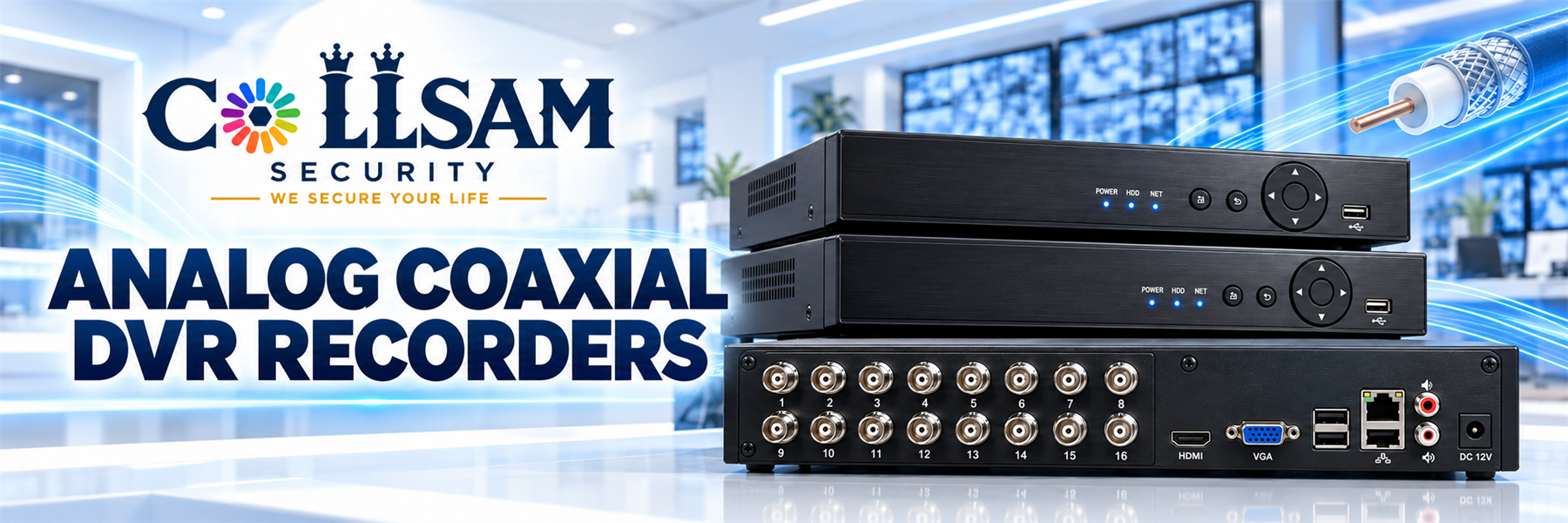
Analog coaxial DVR recorders store video from wired security cameras. They use coax cable to receive each video feed. This group includes HD coaxial DVRs, coaxial security DVRs, 16-channel DVRs, and 4-channel DVRs. Therefore, compare recorders for a wired system.
First, check the video format used by each camera. The DVR and camera must work with the same format. Next, count the cameras you plan to use. You can choose 4-channel DVRs, 8-channel DVRs, 16-channel DVRs, or 32-channel units. Also, spare channels let you add more cameras.
Analog coaxial DVR recorders also need the right hard drive. Storage time can change with camera count, video quality, frame rate, and record mode. Motion recording may use less space than full-time recording. Then, check each model’s drive size.
Many HD coaxial DVRs have HDMI or VGA ports for a screen. Some also have USB ports, audio ports, and network access. Each model is different. Review its listed ports, playback tools, and drive support before you buy.
Coaxial security DVRs can help you update an older wired system. In many cases, the coax cable can stay in place. Still, not every camera works with every DVR. Confirm camera support before you select a unit.
Collsam Security sorts these products by channel count. Compare camera support, video quality, storage, network tools, and screen ports. Analog coaxial DVR recorders should fit the current system and leave room for growth. Choose the model that meets your needs now and supports your next planned camera.