
Recording and Storage
Recording and Storage Technologies
Recording and storage technologies preserve surveillance video for live monitoring, investigations, evidence, compliance, and operational review. A reliable design matches camera count and image quality to retention, bandwidth, cybersecurity, redundancy, and retrieval requirements.
Explore recording and storage technologies
 Network Video Recorders
First, record and manage IP camera streams.
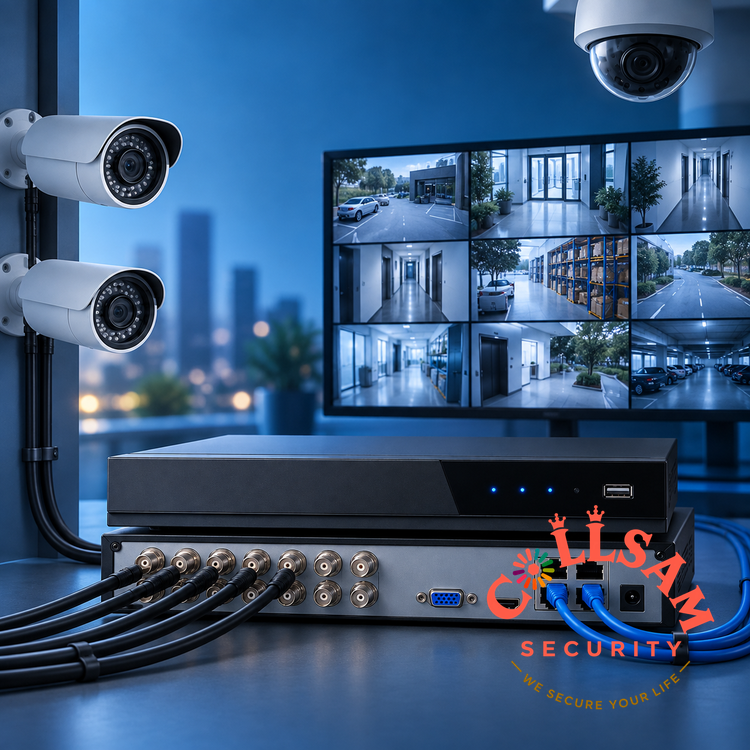 DVR and XVR
Also, support analog and multi-format camera systems.
 Hybrid Recording
Moreover, it combines IP and legacy video sources.
 Edge Storage
Meanwhile, it stores video locally at cameras or edge devices.
 Cloud Recording
Therefore, it provides remote retention and managed access.
 Video Management Systems
Similarly, it centralizes monitoring, search, playback, and administration.
 RAID and Redundant Storage
Finally, it improves resilience through protected disk configurations.
Plan capacity and resilience
First, start with the number of cameras, resolution, frame rate, compression, motion profile, recording schedule, and required retention. Calculate normal and peak data rates. Include room for future cameras, firmware changes, database growth, exports, and system logs.
Next, storage architecture should match the consequences of downtime or lost footage. Review disk health monitoring, RAID behavior, hot spares, failover, backup, disaster recovery, encryption, and access controls. Redundancy protects against some failures, but it does not replace a tested backup and recovery plan.
In addition, recording and storage technologies must also support fast investigations. Confirm search tools, timestamps, audit trails, user permissions, export formats, watermarking, and playback compatibility. Test retrieval under realistic loads and document retention rules so operators understand what is available.
Finally, before deployment, verify compatibility among cameras, recorders, storage, management software, analytics, and client workstations. Maintain firmware, protect administrator accounts, segment networks, and review capacity regularly.
 All Technologies