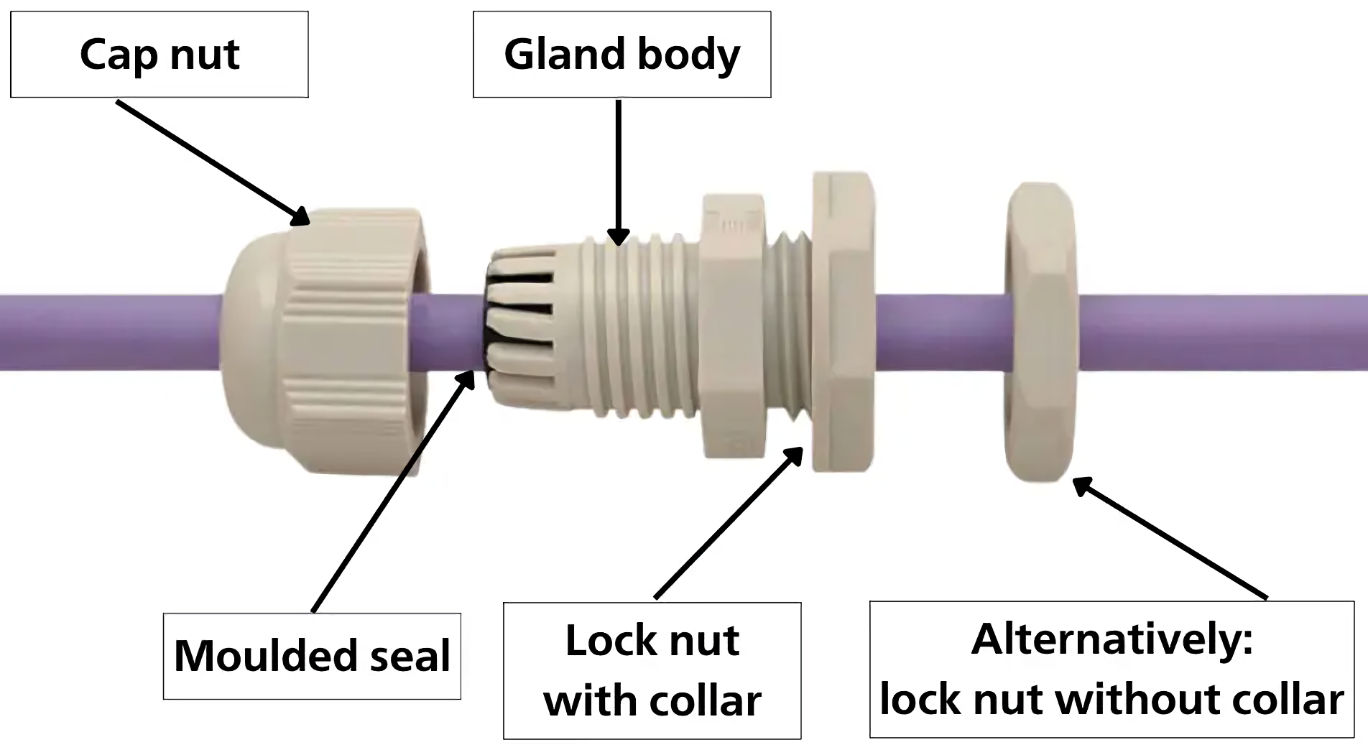
A cable gland, also known as a cord grip, is a crucial mechanical component used in the electrical and electronic sectors. Its main function is to connect and secure the end of an electrical cable to an enclosure or equipment. This is a vital task. It ensures the smooth and efficient functioning of the equipment and reduces the risk of damage or malfunction. Furthermore, cable glands also play a significant role in keeping workers safe. They protect the environment from potential hazards.
One of the primary purposes of a cable gland is to provide strain relief. Because they move or vibrate constantly, cables in electrical and electronic systems are frequently under a lot of stress. Without proper support, the cables can become loose or detached from their connections. This can lead to potential hazards and disruptions in the power supply. The cable gland secures the cable firmly in place. Consequently, this minimizes the strain on the connectors and prevents potential accidents.
In addition to strain relief, cable glands also act as a protective seal. They prevent the ingress of water, dust, oils, or industrial chemicals into electrical enclosures. These elements could otherwise lead to corrosion, short-circuiting, or other forms of damage. Cable gland designs meet various IP (Ingress Protection) ratings. Notably, higher ratings indicate a higher level of protection against environmental factors.
Cable glands come in a wide range of sizes and designs to suit different applications. Some glands feature spiral or flex extensions that provide additional protection against bending fatigue. This is particularly beneficial for moving machinery or handheld electronics. The cable is frequently bent and twisted in these situations. The robotics, automotive, and aerospace industries also commonly use these variants. In these fields, flexible cables are necessary for the smooth operation of the equipment.
In conclusion, a cable gland is a versatile and essential component in the electrical and electronic industries. Along with its primary functions of securing and protecting cables, it also plays a crucial role in ensuring the safety of workers and preventing environmental hazards. With its ability to meet various IP ratings and features such as spiral or flex extensions, the cable gland is a vital component. It helps maintain the efficient functioning of equipment in a wide range of industries.

- Cable gland (cord grip), Camera Mounts and Brackets
TR-A01-IN
Original price was: $8.00.$6.00Current price is: $6.00. Select options This product has multiple variants. The options may be chosen on the product pageQuick View